University YMCA · 1001 S. Wright St., Champaign, IL 61820
Visit universityymca.org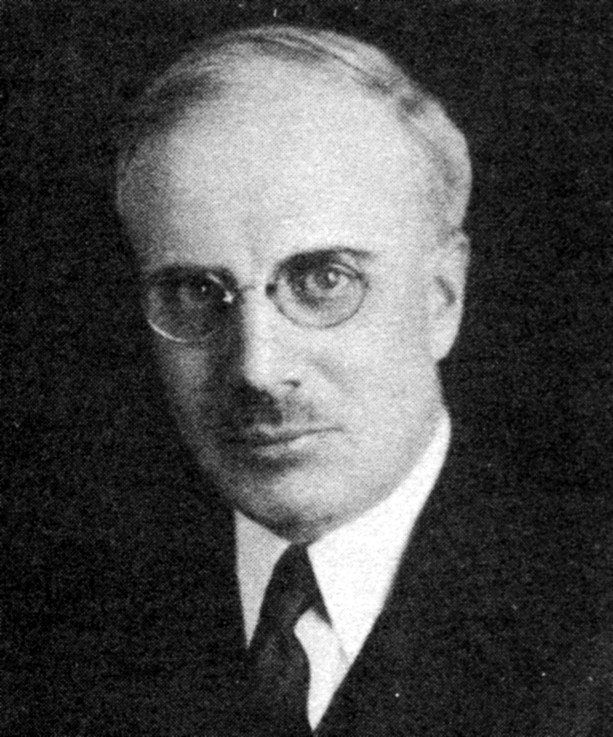
Henry E. Wilson, known to students, staff and faculty as "Chief," led the University YMCA as its general secretary for 30 years, from 1916 until his death in 1946. He moved the Y out of its commercial building and built up its staff and program. He carried it through two world wars and the Depression, and raised the building at Wright and Chalmers that opened in 1938. He held throughout that the Y was a Christian student movement, not an institution.
Henry Edward Wilson was born in Montreal in 1883.1 His father had come to Canada from Dublin, where he had attended the Dublin Military Institute and served in the army. Hannah writes that Henry grew up in a family where the father figure and discipline were important. He had three brothers. After a private preparatory school he joined his father's real estate and shoe business in Winnipeg.2
He was active in the Winnipeg YMCA, and its work with boys drew him into full-time YMCA boys' work. In 1910 he became secretary of the YMCA in Marshalltown, Iowa, mainly a railroad YMCA, where he expanded the program and raised money for a new building. In 1915 he left for a year at Yale Divinity School, where he became interested in the student YMCA movement.2 Scott Peters adds that he had studied at George Williams College and Yale, and that he arrived at Illinois newly ordained as a Congregational minister.3
He was married, and he was survived by his wife, three daughters and a son.41 As an administrator he was businesslike and believed that certain formalities should be observed.5 Once, while he was away raising money in Chicago, his house in Urbana burned. His son met him at the train, and his only question was "Did anyone get hurt?"6
He fell ill in the fall of 1945 and was on leave until the end of April 1946. Peters writes that he never regained his full strength. On Sunday, Sept. 15, 1946, traveling with his wife to their son's wedding in Albuquerque, he died suddenly in St. Mary's Hospital in Kansas City.461 The Daily Illini gave the cause as a cerebral hemorrhage; Hannah says a heart attack.12 On Sept. 19 his body lay in state in the Y's Friendship Hall before his funeral at the First Congregational Church. He was buried in Roselawn Cemetery.1
Wilson came from Yale to begin as general secretary on June 1, 1916, at the age of 33, succeeding E. Glen Hersman.327 Peters calls his hiring a turning point in the Y's work.8 The Association carried a deficit of $40,000 and was bogged down managing Association Hall, the large building with dormitories and a restaurant that it had opened in 1908.3 For two years Wilson worked with no other staff.9 In March 1918 the Board of Directors passed a resolution praising his "sound judgment and clear vision."10
Almost at once Wilson questioned whether Association Hall fit the Y's mission. Hannah writes that he "didn't believe that university YMCAs should operate rooming and boarding establishments."11 In 1917 the Board let the School of Military Aeronautics take over the building, and the Y never moved back. It was sold to the Illinois Union in 1923 and became Illini Hall.31213 During the First World War the Y served the student soldiers training on campus, with films and religious meetings, and wrapped and mailed their parcels home.14 From late 1918 its headquarters was the Hut, an army-style barracks at Green and Wright streets, until the Hut burned in December 1923.1512
In 1918 Wilson hired C. D. Hayes, who had spent six years in China, to work with international students. The same year he hired Mic Coldwell, whom he had found working with the student soldiers. Hal Colvin followed in 1919 to lead the work with boys that Wilson had brought with him from Winnipeg.91617 In 1925 he brought Melville T. Kennedy, a former missionary in India, to lead the foreign student program.18 By the mid-1920s the Y had seven full-time secretaries.19 Wilson and Coldwell, Hannah writes, were "both strongminded individuals with their own ideas about running a railroad," and the tension between them never subsided.16
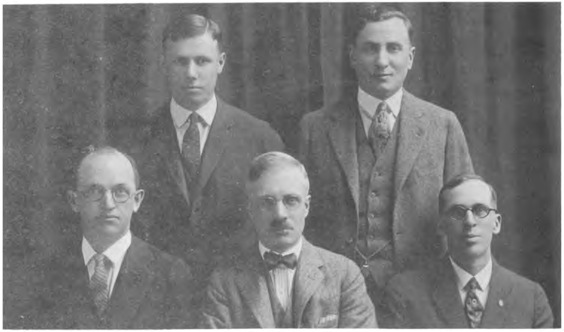
On campus, Hannah writes, Wilson's prime objective was to reach students. The means were Bible study, Freshman Fellowship groups and All-University services, and help with jobs, rooms and the needs of foreign students.9 Under him the Y began Freshman Camp in 1926, the Faculty Forum in 1927, and in 1928 the Fireside Forums, discussions held in fraternity and rooming houses.2021 In 1939 he reported to the Board that the Freshman Camps were "highly successful."22 He sometimes spoke at the Faculty Forum himself. On March 28, 1930, he asked "What Shall We Teach Our Children About Religion?"23 He was also a leader in state and national YMCA work, and in 1921 he went to Europe as a member of the World Student Christian Federation's Relief Commission.24
Wilson doubled the budget, from about $20,000 in 1916 to more than $45,000 in 1924–25, by treating the whole state as the Y's constituency. He enlarged the Board of Directors to 30 men and in 1923 created a Board of Trustees to oversee an endowment.25 He did not want another large building. He wanted a modest center "out from which men will go to serve the campus rather than a building to which we will expect great numbers of men to come."26 In 1924 the Y bought two faculty houses at Wright and Chalmers streets as its site.1527
A campaign for a million-dollar building and endowment stalled, and in January 1930 Wilson took over its direction himself.28 Then came the Depression. Pledges for the building could not be met, the budget fell to a low of $21,993 in 1935–36, and Wilson regularly gave back as much as a third of his $5,400 salary.619 A new drive launched in 1935 succeeded. John R. Mott laid the cornerstone on Nov. 21, 1937, and the Y moved into its building at 1001 S. Wright St. in 1938.2729
At the dedication, on April 30, 1939, the principal speaker was the British scientist Sir William Bragg, who came, Hannah writes, only because of Wilson's influence. Wilson read the Board's official dedication statement, which Peters believes he most likely wrote.3031
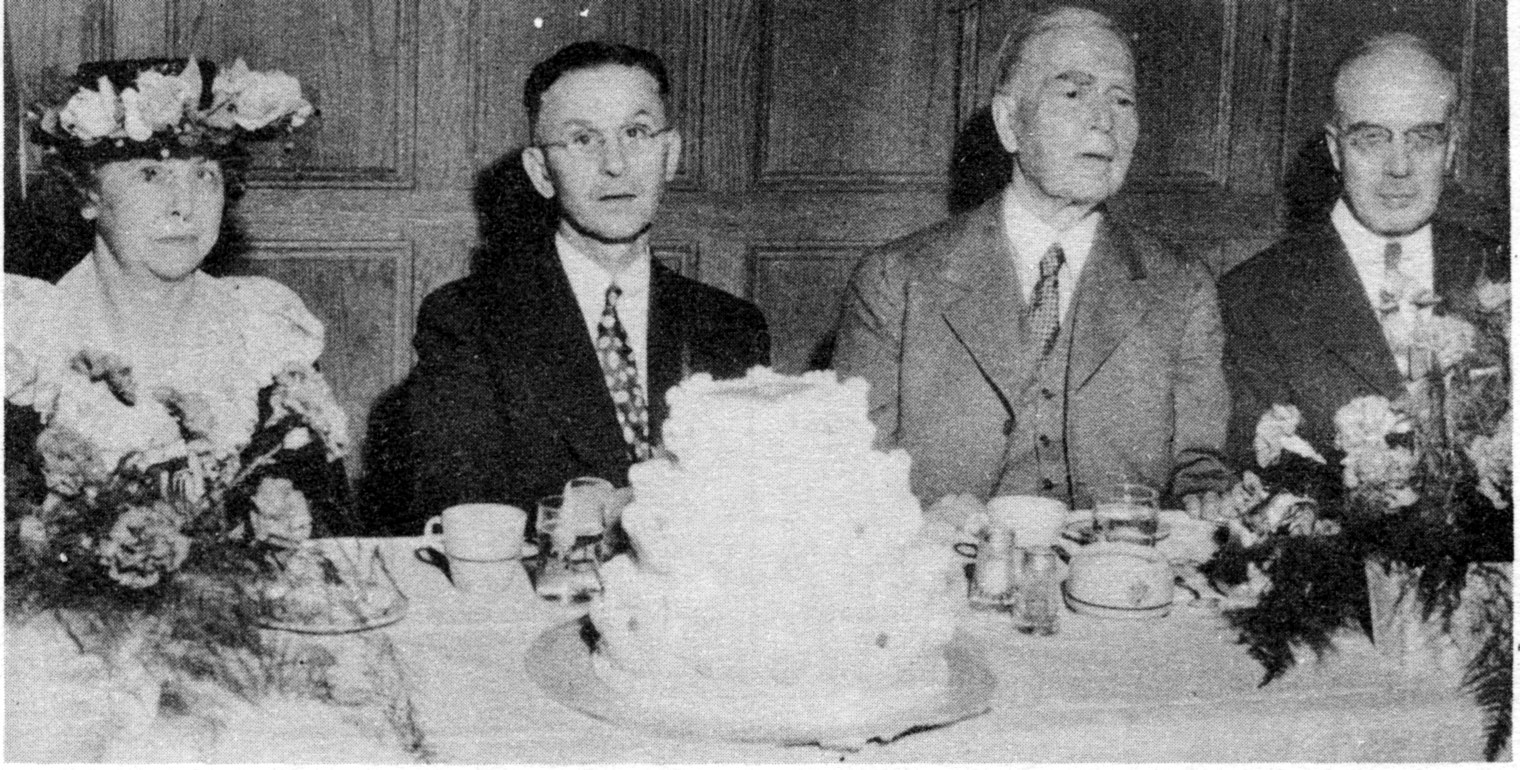
On Dec. 3, 1941, almost 400 faculty members, students and state and national YMCA officials gathered in Latzer Hall for a dinner marking his 25 years with the Y. Guy A. Tawney reviewed 25 years of the Association's history, and Dean A. J. Harno of the College of Law gave the closing address. Prof. J. C. Blair presented him with a testimonial plaque.3233345 In 1944 Wilson proposed a $250,000 "stabilization fund" to retire the deficit and the debt on the building, and to add staff for the veterans who would soon return. It reached $166,556 in 1947.3536 In 1944 the YMCA's centennial film, Men of Tomorrow, showed him counseling students in the University Y.37 Hannah writes that his planning helped set the Y up for its work with veterans after the war, work he did not live to see.38 He died in office in September 1946, and Phil Morgan succeeded him.3940
On the students who saw the Y as a building, in 1927: many "come to the University with an institutionalized interpretation of the Association that it is exceedingly difficult for them to recognize it as a Christian movement, rather than as a building where they may indulge in swimming or gymnastics or other pastimes."41
To the Board in 1933: "This organization is indigenous to the campus community. Its purpose is in line with that of the University, which, in the large, is to make for a better citizenship."42 Training for citizenship, he went on, "must make for attitudes which will render impossible bloodshed between races or social groups or international groups."43
To the Board in 1934: "In the face of strong efforts to develop racial prejudice, we have maintained an emphasis on the Christian attitude toward race."25
In November 1934 he began a column for The Y's Indian, "A Letter from the Chief." On the stalled building campaign: "Old Man Depression had the door slammed almost shut, we just kept a foot in it." The questions of thoughtful students, he wrote, were "more and more ... in substance, 'How may I master my destiny? Is there any light to break over the sense of futility? Is there such a thing as justice?'"44
His advice to the Y's fund-raisers, 1925: "Register expectation in every contact. Do not permit discouragement, have faith, courage, and optimism in all your work."28
On the freshmen of 1939: "This incoming college generation can be depended upon to assume responsibility for maintaining high ideals if given encouragement and guidance."22
"A new generation must be appealed to in terms it understands, in a language which conveys the sense of the message."45
At the Y's 70th anniversary dinner in 1943, he said the anniversary "is not a time for retreat nor is it a time to live on the glories of the past, but a time for renewed attack."46
From the 1939 dedication statement, which Peters believes he wrote: "What shall it profit an organization if it gains a fine building and endowment, and loses thereby its sense of mission and its own soul?"47
In 1918, less than two years after he came, the Board of Directors resolved that "a continuance of his services are as nearly vital to the success of these plans as the services of any one man can be said to be vital in such projects."10
Pence James of the Chicago Daily News described him in 1941 as "a social worker, a fighter for his beliefs, counselor and friend." One moment he was "a father to a discouraged youth," the next "a hard-pushing business man making calls at offices all over the state to raise the budget."48
At his 25th-anniversary dinner, the Y's paper called him "the greatest single factor in the development of the University Association into one of the largest, most active student Associations in the world."34
Students, faculty and townspeople knew him as "Chief" from his early years. A Daily Illini humor column of 1920 mentions "Chief Wilson from the y hut," and in 1941 the paper said he was "more familiarly known as Chief to students, faculty men, and townspeople."4950
Jim Lake, Y president in 1933–34: "No account of these days, no matter how brief, would be complete without a tribute to Chief Wilson who was an inspiring man in every way."51 Louis Hauptfleisch, president in 1939–40, said his memories of Wilson and Coldwell "are still very dear and very nostalgic. Both of these men played a vital part in helping a small country boy like myself find himself."52
When he died, students and faculty who had worked with him "could only voice an unbelieving, 'It can't be true!'"53 On Oct. 22, 1946, the University's Board of Trustees resolved that "the University of Illinois lost a loyal friend."654
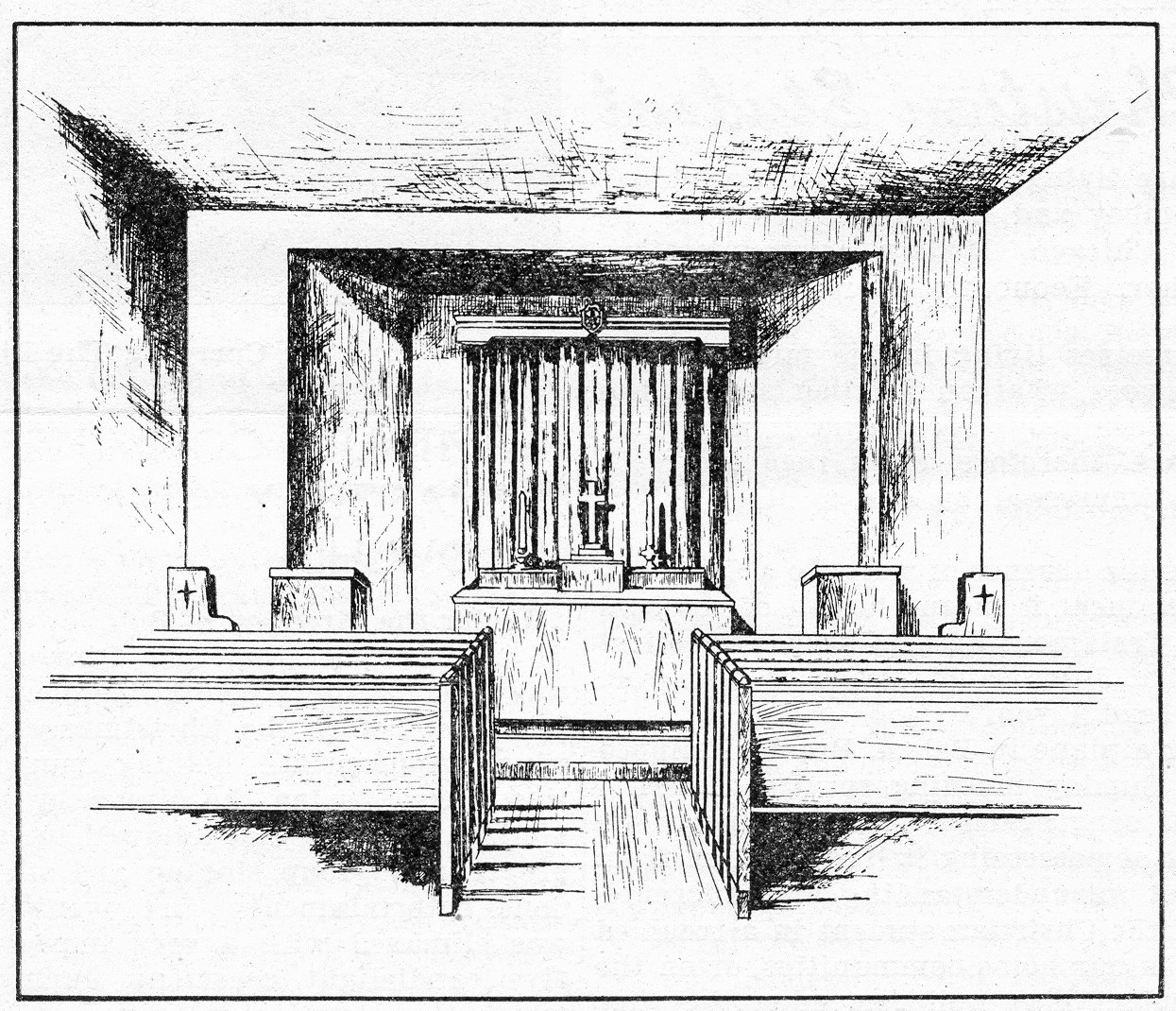
Hannah wrote that he "had one mission in life that overshadowed all others. That mission was to make the University of Illinois YMCA the most effective and outstanding student Christian association in the country."2 The leaflet for his memorial chapel in 1953 said that "those who knew and loved him as 'Chief' affirm that the more important monument is in the lives of the many students whom he influenced deeply and lastingly."24
.svg)