University YMCA · 1001 S. Wright St., Champaign, IL 61820
Visit universityymca.org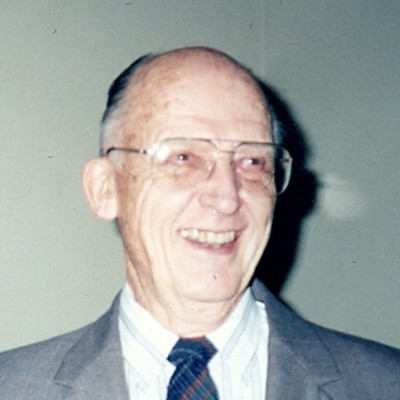
Ed Nestingen came to the University YMCA in 1959 after two decades in the student YMCA movement, and served it for more than 30 years: as its program director for nearly two decades, the steady hand behind the Faculty Forum, interim executive director in 1984, and director of the Bailey Scholarship Fund until 1991. Scott Peters credits him with turning around the Y's work with undergraduates and reaching a generation of students with his search for life purpose and meaning.
Edward L. Nestingen was born on Oct. 22, 1913, in Sparta, Wisconsin, the eldest of five brothers. He was active in the Boy Scouts, and for the rest of his life he fished for trout and backpacked along Wisconsin's streams.1
He graduated from the University of Wisconsin in 1937 and joined the staff of its YMCA. In 1942 he enrolled at Union Theological Seminary in New York. Those two experiences, his obituary says, shaped his life's work.12 After graduating in 1945 he directed the YMCA's work at City College and at the NYU College of Medicine in New York. From 1948 to 1952 he was co-executive of the Campus Y at Washington University in St. Louis. In 1952 he became program director for the College and University YMCAs nationally and editor of The Intercollegian, a monthly magazine about life purpose and the goals of higher education.134
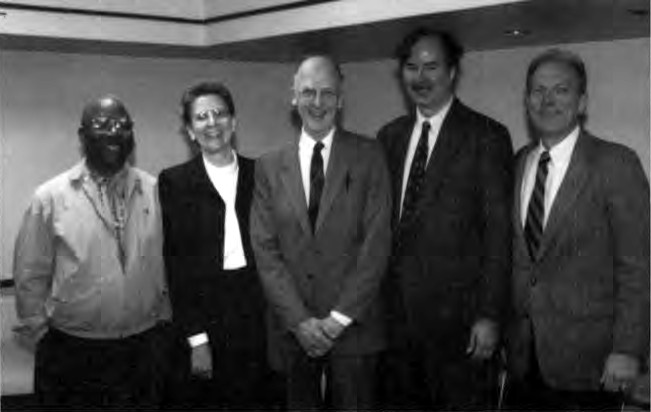
He married Ruth Hitchcock Russell in 1956, and they moved to Urbana in 1959, when he joined the University YMCA staff. They were members of McKinley Presbyterian Church. Ruth died in 2007.1 Ed stayed close to the Y long after he retired. In his mid-nineties he was still urging help for students facing the rising cost of college.4 He was also a founding member of the community's Martin Luther King Jr. Scholarship Fund.1
He died at Clark-Lindsey Village in Urbana on Feb. 20, 2011, at the age of 97. His memorial service was held at McKinley Presbyterian Church on Feb. 28.1
In March 1959 the Daily Illini reported that Nestingen would replace Al Herman as the University YMCA's adviser to undergraduates and would also work with the Faculty Forum committee.5 He began in April 1959 as associate secretary for program, joining the new general secretary, Fred Miller, after a 1957 self-study had judged the Y's work with undergraduates weak.63 That July he was with the Y's staff at a meeting in Estes Park, Colorado.7

Miller and Nestingen revived Freshman Camp in 1959, after two years without one.8 Scott Peters gives Nestingen much of the credit for turning around the Y's work with undergraduates. As John Price reached international students, Nestingen reached a generation of undergraduates through his own search for life purpose and meaning, and by challenging others to live out their beliefs.9
He spent countless hours, from 1959 to the end of the 1960s, working through questions of identity, relationship and purpose with hundreds of students, in Peters's words "in highly creative, innovative ways."2 The members of the 1962–63 Student Cabinet later said their lives were deeply changed by their time at the Y, in large part because of his counsel.10 His other responsibilities included guiding the community-wide PAL Program and helping students found Students for Environmental Concerns in 1969–70.111
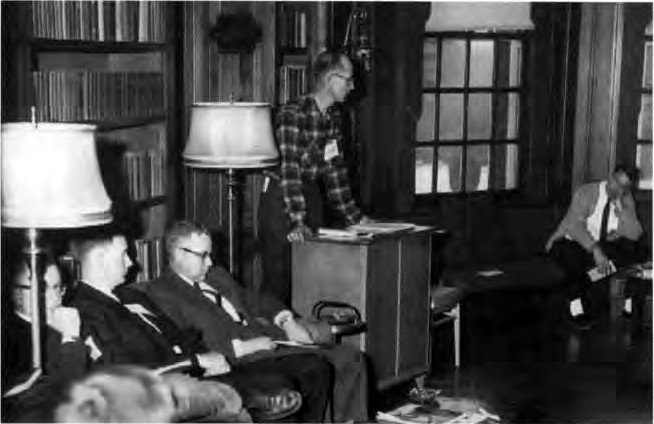
Nestingen worked with the Faculty Forum, now the Friday Forum, from his first year, and developed many of the Y's forum programs.51 In 1965 a Daily Illini editorial called him the "omnipresent man-behind-the-scenes" of the Y's student and faculty forums.12 He sat on the forum's planning committee into the 1970s.13 He described its purpose as exploring major social issues across disciplines and with an eye to action, not as an academic exercise.14 By 1978 he knew more than 500 faculty members by name through the forum.15
At a Board discussion in 1968 he told the directors that students were growing impatient with programs built around listening to speeches and wanted to take part in action projects. The Y needed to change to meet them, he said, and he asked the Board what path it meant to take.16 By the early 1970s the introspective program he had built around the search for religious meaning had lost much of its appeal, and the Student Cabinet was dropped in 1971.2
He helped Harold Hannah with the Y's centennial history in 1973, explaining the trends of the past decade and lending his own files.17 Hannah listed him as program staff director since 1959, longer on the staff than anyone but Hal Colvin.18 In 1973 his work moved to financial development, and he retired at the end of 1978 after nearly 20 years on the staff.1920
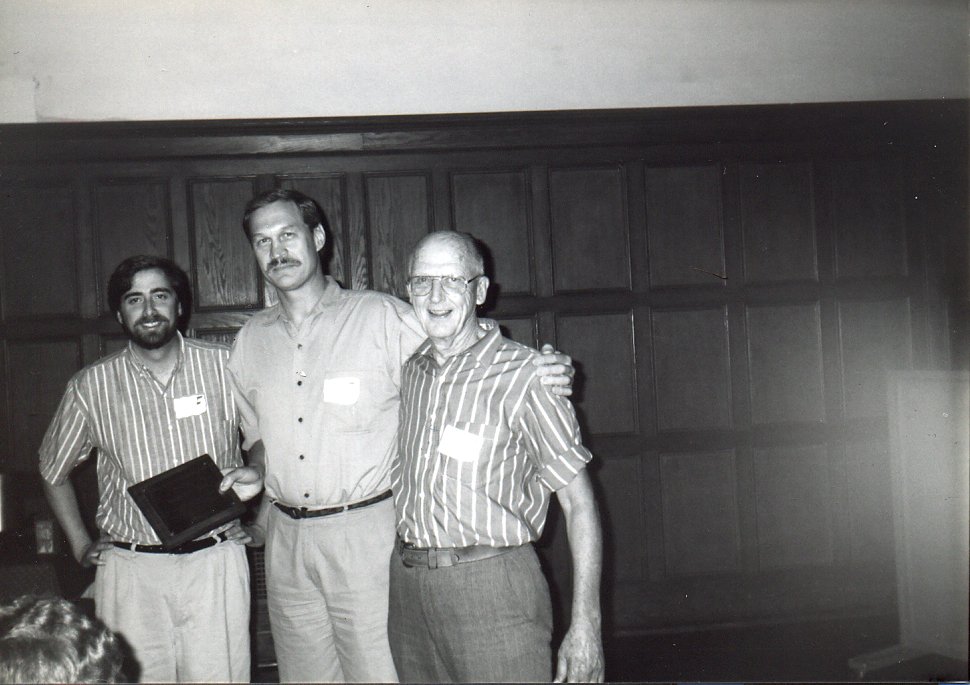
He came out of his first retirement to direct the Fred S. Bailey Scholarship Program, part time, until August 1991.201 When Executive Director David Lindstrom left at the end of April 1984, he served as interim executive director until Mark Johnson arrived that September.21 In 1993 he coordinated the 25th-anniversary reunion of Students for Environmental Concerns.11
In July 2006, at the age of 92, Ed sat for a long interview with Tom Seals for the University YMCA's capital campaign. He talked about student leadership, the PAL Program, Students for Environmental Concerns and International Welcome Weekend. Watch the interview on YouTube (37 minutes).22
On the University's purpose, he asked how far it could "encourage students to a greater and deeper awareness of fundamental values."23
On the Y's campaign of the 1950s against segregated barbershops, restaurants and housing, he called it "Christianity in action on social structures."24
On the early 1960s: "The great debates were conceived and orbited amid a campus mood of expectant excitement."25
To the Board in 1968: "Strong conservative forces in the Y and among students are bucking change."16
On the Y in 1973, he saw a tension "between our heritage and our present reality."26
The phrases he hoped Hannah would keep in mind about the Y included "visions and deeds," "exploring the frontiers," "we care and we try" and "a force for constructive change."18
Jerry Glashagel, a former student, told Hannah: "The U. of I. would not have been for me if not for Ed." Ed, he said, kept them going, honest, thinking and practical.18
Hannah counted him among the staff members, with Henry Wilson, Mic Coldwell and John Price, "who did not keep hours," without whom the Y's story would have been ordinary.27
His obituary remembered his gratitude, deep spirituality and quick wit, and his love of nature and of responsible living on the Earth. When the Y posted it in 2011, it added: "Ed Nestingen's impact on the University YMCA is immeasurable."128
.svg)